

What Happens in the First Couples Therapy Session

Table of Contents
What Happens in the First Couples Therapy Session: A Step-by-Step Walkthrough
Step 1: Intake Paperwork and Consent Before You Sit Down
Step 2: Introductions and Building Rapport
Step 3: Why You're Here: The Presenting Issue From Both Sides
How Long Is a Couples Therapy Session?
In-person or online, which should you choose?
What to bring to your first session
Late arrivals, cancellations, and no-shows
What if your partner will not come?
First Couples Therapy Session Questions Your Therapist Will Ask
Questions About Your Relationship History and Background
Questions About Communication Patterns and Recurring Conflict
How to Prepare for Couples Therapy (Without Over-Preparing)
Confidentiality, Privacy, and Individual Disclosures
What If My Partner Refuses Couples Therapy?
What Happens After the First Session: Goals and a Follow-Up Plan
Frequently Asked Questions
Last Updated: October 12, 2026
What Happens in the First Couples Therapy Session: A Step-by-Step Walkthrough
A first couples therapy session is an intake appointment, not a fix-it meeting. You will sign consent forms, meet your therapist, and each of you will describe what brought you in. No one expects you to solve years of conflict in 50 minutes. (Source: Statistics Canada's General Social Survey)
That surprises a lot of people. Many couples walk in braced for a verdict. What they get instead is a structured conversation. At Clear Minds Counselling, we tell couples the same thing before they arrive: the first couples therapy session is information gathering, and that is exactly how it should work.

Here is what actually happens, step by step.
Step 1: Intake Paperwork and Consent Before You Sit Down
Paperwork comes first, usually before your appointment or in the waiting room. You will fill out intake forms covering your names, contact details, and a short summary of your relationship.
Then comes the consent form. It explains confidentiality, its limits, and how your information is stored. Read it properly. Ask anything you do not understand. This is also where you confirm whether you are attending as a couple, and whether either of you sees a therapist individually.
Step 2: Introductions and Building Rapport
Your therapist will introduce themselves and explain how they work. Expect small talk, but purposeful small talk. This is the start of the working alliance, the trust that makes hard conversations possible later.
A common mistake is treating this part as filler. It is not. Rapport is what lets you say the honest thing in week three instead of week ten.
Step 3: Why You're Here: The Presenting Issue From Both Sides
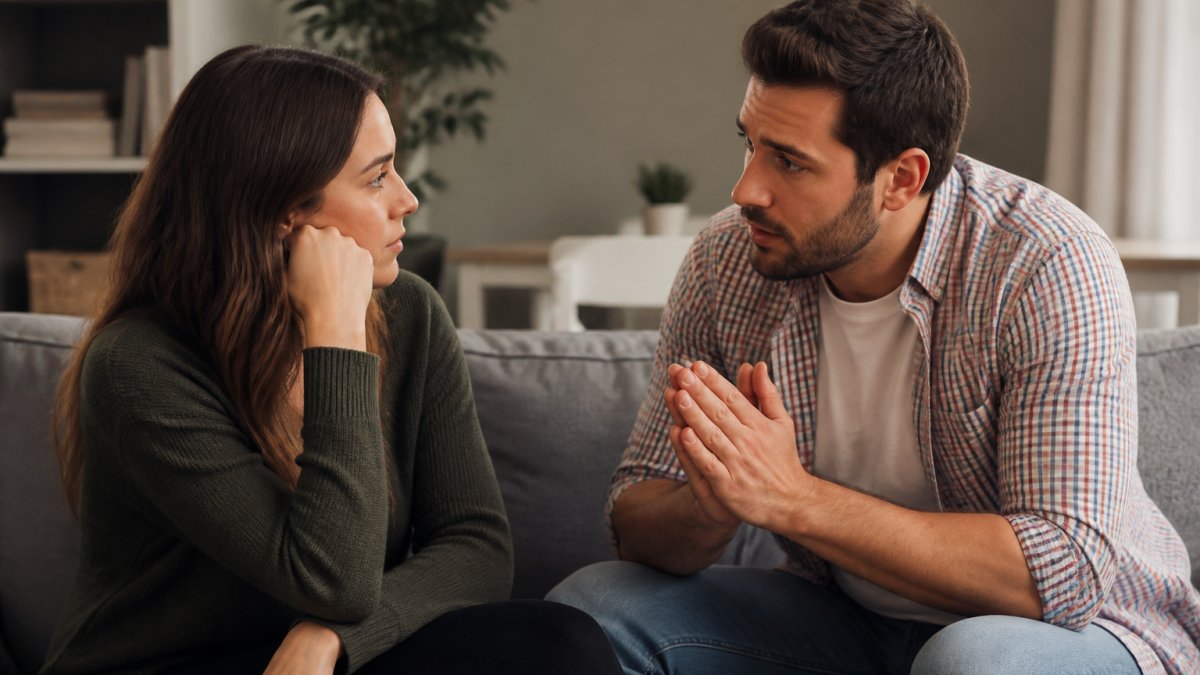
This is the heart of the first session. Your therapist will ask each of you, separately, what brought you in. The reason you give is called the presenting issue.
Both partners get uninterrupted time. Your therapist listens, reflects back what they hear, and takes notes. They are not deciding who is right. They are mapping the relationship.
How Long Is a Couples Therapy Session?
A standard couples therapy session runs about 50 to 60 minutes. Some therapists offer longer initial sessions, often 75 to 90 minutes, to fit in the extra intake and history taking.
Your first session may feel like it ends just as things get going. That is normal. The goal is not depth on day one. It is a clear picture of your relationship and a plan for what comes next.
In-person or online, which should you choose?
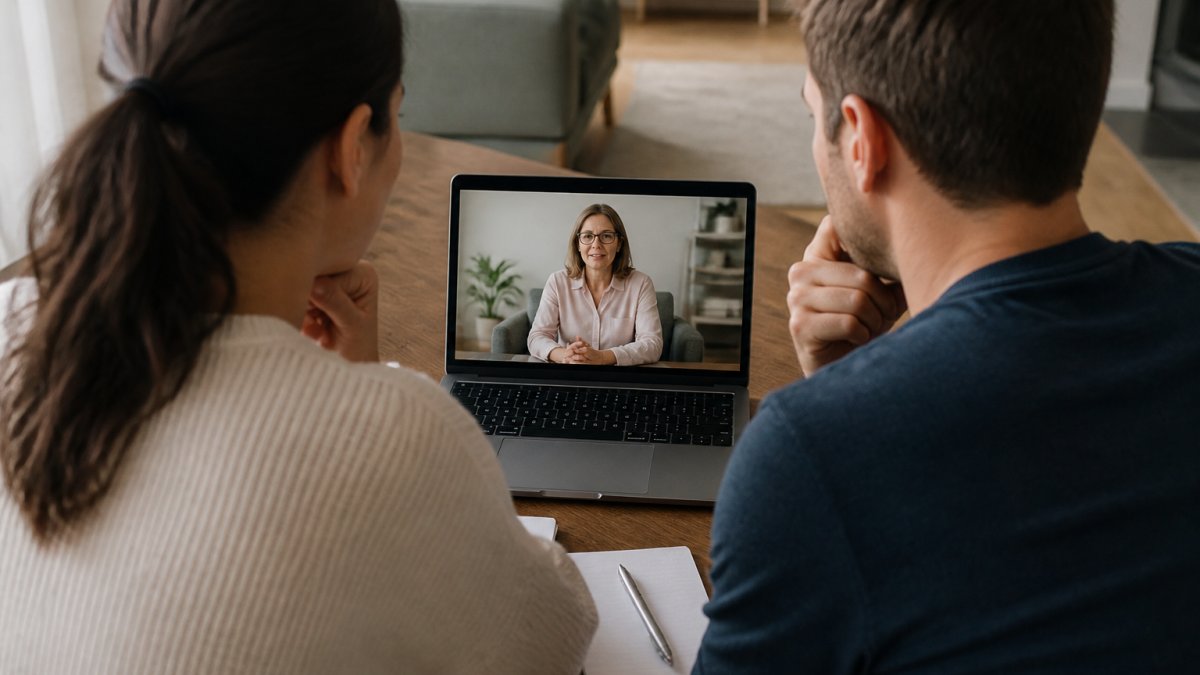
Both work, and the research on virtual couples therapy is generally positive. The right choice usually comes down to logistics and comfort:
In-person suits couples who find it easier to focus when they leave the house, or who want the therapist to read body language in the room.
Online suits busy schedules, long distances, and couples who feel less exposed talking from their own space.
If you are not sure, ask. Many practices let you switch between the two as your schedule changes.
What to bring to your first session
You do not need much. Bring:
A piece of ID and your insurance or benefit information, if you plan to use it
Any intake forms your therapist asked you to complete ahead of time
A short list of the situations that keep repeating
A willingness to be honest, even imperfectly
Leave the evidence at home. Screenshots, text logs, and "proof" of who was right tend to shut down the conversation rather than open it.
Late arrivals, cancellations, and no-shows
Most practices have a clear policy on this, and it is worth reading before you book. Common terms:
A late arrival usually shortens your session rather than extending it, since the next couple is waiting
Cancellations often need 24 to 48 hours' notice to avoid a fee
Repeated no-shows may end the therapy, because the work depends on consistency
If something comes up, call. Therapists are usually more flexible with a heads-up than with silence.
What if your partner will not come?
You can still start. One partner attending alone is common, and it is not pointless.
Your therapist can help you understand your side of the cycle, change how you respond, and invite your partner in when they are ready. Sometimes the shift in one person changes the dynamic enough that the other becomes willing. If your partner refuses, say so directly in your first call. A good therapist will tell you honestly what solo work can and cannot do.
Key Takeaway The logistics are not the therapy, but they shape whether the therapy happens. Sort out the format, the timing, and the backup plan before your first session so the hour itself is spent on the relationship, not on the arrangements.
First Couples Therapy Session Questions Your Therapist Will Ask
Expect direct questions, asked kindly. Your therapist needs your relationship history and your current patterns to understand why the same fight keeps happening.
The Most Vital Couples Therapy First Session Questions
My People Patterns
Answer as honestly as you can. You do not need polished answers. Rough, real ones are more useful.
Questions About Your Relationship History and Background
How did you meet, and how long have you been together?
What was the relationship like early on?
Have you been through counselling before, together or alone?
Any major stressors recently: a move, a loss, a job change, a new baby?
How do you handle money, family, and household responsibilities?
Questions About Communication Patterns and Recurring Conflict
What does a typical argument look like, start to finish?
Who usually raises the issue first?
What happens when one of you shuts down or walks away?
How do you repair after a fight?
What do you each need from the other that you are not getting?
Pro Tip Notice the phrase "recurring cycle." Therapists look for the pattern underneath the topic. You may argue about dishes, but the cycle is usually pursue-and-withdraw: one partner pushes for connection, the other pulls back to cool down. Naming that cycle out loud is often the first real shift.
How to Prepare for Couples Therapy (Without Over-Preparing)
You do not need to prepare a speech. The most useful preparation is deciding what you want the therapist to understand about your relationship.
Try this before your first appointment:
Agree on one shared goal, even a vague one like "we want to fight less"
Write down two or three situations that keep repeating
Note what you have already tried
Decide what you are willing to say out loud
Clear your schedule so you are not rushing in from work
What most guides miss is that over-preparing backfires. If you rehearse a case against your partner, you walk in defending instead of listening. Come with honesty, not a closing argument.
Confidentiality, Privacy, and Individual Disclosures
Confidentiality in couples therapy works differently than in individual therapy. Your therapist keeps what you share private, with legal limits: risk of harm to you or someone else, and child protection concerns.
Many therapists also set a "no secrets" policy. If one partner shares something important in an individual session, the therapist may ask that it be brought into a joint session. Ask about this policy in your first session. It prevents painful surprises later.
What If My Partner Refuses Couples Therapy?
You can still start. One partner attending alone is common, and it is not pointless.
Your therapist can help you understand your side of the cycle, change how you respond, and invite your partner in when they are ready. Sometimes the shift in one person changes the dynamic enough that the other becomes willing. If your partner refuses, say so directly in your first call. A good therapist will tell you honestly what solo work can and cannot do.
What Happens After the First Session: Goals and a Follow-Up Plan
Your therapist will summarize what they heard and suggest a direction. You may set one or two treatment goals, not ten. Early goals are usually about communication, not resolution.
Expect a follow-up session within one to two weeks. Consistency matters more than intensity. Weekly sessions for the first month or two give the work a chance to build.
Watch Out If there is active abuse, coercive control, or an active addiction in the relationship, joint sessions may not be safe or useful yet. Tell your therapist during intake. They will screen for this and may recommend individual support first.
The first session will not fix your relationship, and it is not supposed to. What it does is give you both a shared map of the pattern you keep repeating, and a therapist who can help you change it. At Clear Minds Counselling, our team uses evidence-based, neuroscience-informed therapy to help couples across Alberta build practical tools for real change, with in-person sessions in Medicine Hat and Lethbridge and virtual counselling available province-wide. Book a free consultation and take the first step.
Frequently Asked Questions
What should you expect from a first couples therapy session?
Expect introductions, a clear explanation of how the therapist works, and time for each partner to describe the relationship concerns in their own words. Your therapist will ask about your relationship history, current communication patterns, and the recurring conflict that brought you in. You will not resolve your problems in this session. The goal is information gathering, shared understanding, and agreeing on initial treatment goals. Many people find the structure itself reassuring once they are in the room.
How long does a couples therapy session last?
Most couples therapy sessions run about 50 to 80 minutes, though some therapists offer longer extended sessions. The first session often runs slightly longer than usual because of intake and history taking. Ask your therapist about the couples therapy session length when you book, and confirm whether the first appointment includes extra assessment time. That way you can plan childcare, work, and travel without rushing the end of the session.
Do both partners need to talk in the first couples therapy session?
Both partners are encouraged to speak, but nobody is forced to share more than they are ready to. A skilled therapist balances the room so one person does not dominate and the other does not disappear into silence. If you are quieter by nature, you can say so at the start. The therapist's role is to stay neutral and nonjudgmental, which means both perspectives get airtime even when you disagree about the problem or the goals.
What should you do if your partner refuses couples therapy?
You can still start. Many people begin relationship counselling alone to understand their own patterns, communication habits, and needs, and partners sometimes join later once they see changes. Avoid ultimatums and blame, which usually harden resistance. Instead, name what you want for the relationship and invite your partner to a free consultation with no commitment. If joint sessions are not appropriate, for example when safety is a concern, a therapist will discuss individual support and safety planning with you.
Book a Free Consultation

Comments